
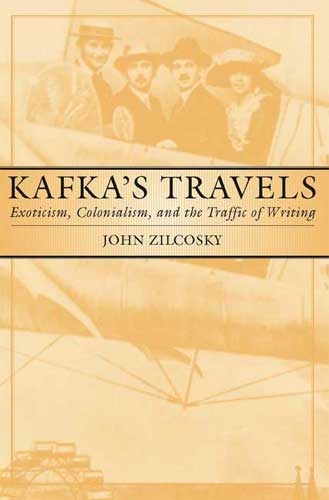
Kafka's Travels: Exoticism, Colonialism and the Traffic of Writing - John Zilcosky
- Kategoria
- Dodał
-
- ebook
- pobierz
- mobi
- epub
In 1916, Kafka writes of The Sugar Baron, a dime-store colonial adventure story, "[it] affects me so deeply that I feel it is about myself, or as if it were the book of rules for my life." John Zilcosky reveals that this perhaps surprising statement -- made by the Prague-bound poet of modern isolation -- is part of a network of remarks that exemplify Kafka's ongoing preoccupation with popular travel writing, exoticism, and colonial fantasy. Taking this biographical peculiarity as a starting point, Kafka's Travels elegantly re-reads Kafka's major works (Amerika, The Trial, In the Penal Colony, The Castle ) through the lens of fin-de-siecle travel culture. Making use of previously unexplored literary and cultural materials--travel diaries, train schedules, tour guides, adventure novels--Zilcosky argues that Kafka's uniquely modern metaphorics of alienation emerges out of the author's complex encounter with the travel discourses of his day.
Rejestracja jest darmowa i bardzo szybka! Kliknij tutaj aby założyć konto. Trwa to tylko 15 sekund!.