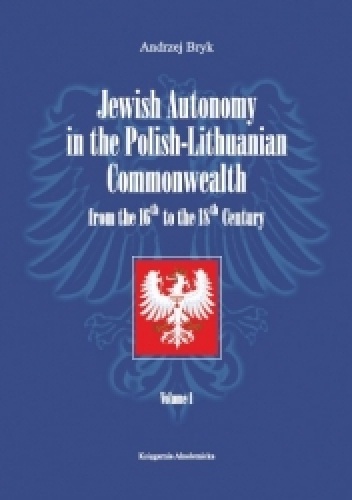
Jewish Autonomy in the Polish-Lithuanian Commonwealth from the 16th to the 18th Century. Volume 1 - Andrzej Bryk
- Kategoria
- Tagi
- Dodał
-
- ebook
- pobierz
- mobi
- epub
The book constitutes a new and original approach to the history of Jews living in Polish-Lithuanian Commonwealth. Its most important value lies in presenting the Jewish life in the Polish-Lithuanian Commonwealth in the wider context of the vicissitudes of both European and Polish history... Its main premise is that the Commonwealth chapter in Jewish history cannot be fully comprehended without the understanding of political and constitutional peculiarity of its religious toleration, its multiethnic and multidenominational character and its unprecedented practical tolerance stemming from a system of power of dispersed sovereignty – a striking anomaly in the age of the rise of absolutist monarchy in Europe... The unique, quasi-estate position of Jews within such a system was inextricably connected with the important role they played in the country’s economy which, despite its neo-feudal character gave the Jews a chance to develop a strikingly rich and unprecedented Yiddish civilization with great spiritual achievements...
Rejestracja jest darmowa i bardzo szybka! Kliknij tutaj aby założyć konto. Trwa to tylko 15 sekund!.